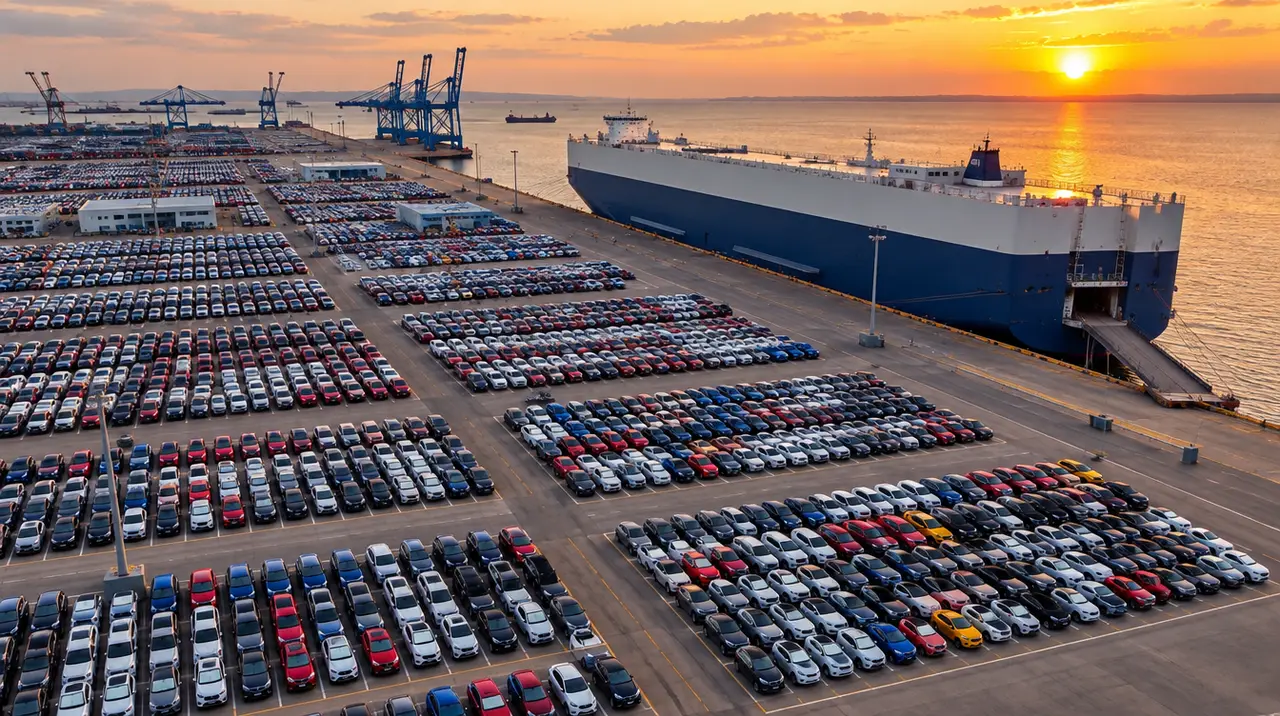
The big automotive groups
Most brands belong to a handful of giant groups that share platforms, engines and technology. That is why a Škoda and a Volkswagen, or a Kia and a Hyundai, often have a lot in common under the skin.
| Group | Home | Main brands |
|---|---|---|
| Toyota Motor | Japan | Toyota, Lexus, Daihatsu |
| Volkswagen Group | Germany | Volkswagen, Audi, Škoda, SEAT, Cupra, Porsche, Lamborghini, Bentley |
| Hyundai Motor Group | South Korea | Hyundai, Kia, Genesis |
| Stellantis | Netherlands (Franco-Italian-American) | Peugeot, Citroën, DS, Opel/Vauxhall, Fiat, Alfa Romeo, Lancia, Maserati, Abarth, Jeep, Dodge, Ram, Chrysler |
| General Motors | USA | Chevrolet, GMC, Cadillac, Buick |
| Ford Motor | USA | Ford, Lincoln |
| BYD | China | BYD, Denza, Fangchengbao, Yangwang |
| Geely Holding | China | Geely, Volvo Cars, Polestar, Zeekr, Lynk & Co, Lotus, Proton (stake), Smart (50%) |
| Renault Group | France | Renault, Dacia, Alpine |
| BMW Group | Germany | BMW, Mini, Rolls-Royce |
| Mercedes-Benz Group | Germany | Mercedes-Benz, Mercedes-AMG, Mercedes-Maybach, Smart (50%) |
| Tata Motors | India | Tata, Jaguar, Land Rover (Range Rover, Defender, Discovery) |
| SAIC Motor | China | MG, Roewe, IM, Maxus; partner of VW and GM in China |
Ownership structures change — check the latest news before relying on this for investment or business decisions.
Brands by country
Filter by country of origin:
Volkswagen
“The people’s car”. Beetle, Golf, Passat and the ID. electric family. One of the two biggest car makers in the world.
Mercedes-Benz
Karl Benz patented the first petrol car in 1886. Known for luxury, comfort and safety innovations; AMG is its performance arm.
BMW
Bavarian maker famous for sporty rear-wheel-drive sedans, inline-6 engines and the M performance division.
Audi
Four rings for four merged companies. Pioneered quattro all-wheel drive in rallying; premium design and interiors.
Porsche
Sports-car icon: the rear-engined 911 has been built since 1963. Record Le Mans winner; also makes Cayenne, Macan and Taycan.
Opel / Vauxhall
Started with sewing machines and bicycles. Affordable family cars like the Corsa and Astra; sold as Vauxhall in the UK.
Toyota
World’s best-selling car maker for years. Legendary reliability, Corolla (the best-selling car in history), Land Cruiser and hybrid pioneer with the Prius.
Lexus
Toyota’s premium brand, known for quiet luxury, excellent build quality and smooth hybrids.
Honda
World’s largest engine maker (including motorcycles). Civic, CR-V, VTEC engines, the NSX supercar and F1 engine success.
Nissan
Makes the GT-R “Godzilla”, the Z sports car and the Leaf — one of the first mass-market EVs (2010).
Mazda
Engineering maverick: rotary engines, the MX-5 (best-selling roadster ever) and elegant “Kodo” design.
Subaru
Boxer engines and symmetrical all-wheel drive in almost every model. Rally legend with the Impreza WRX STI.
Suzuki
Small-car specialist: Swift, Vitara and the tiny off-roader Jimny. Market leader in India through Maruti Suzuki.
Mitsubishi
Famous for the Lancer Evolution rally car and the Pajero/Montero, a Dakar record winner. Strong in PHEV SUVs (Outlander).
Ford
The Model T and the moving assembly line (1913) put the world on wheels. Today: F-Series pickups, Mustang, Ranger, Transit.
Chevrolet
America’s everyday brand: Silverado pickups, Tahoe SUVs and the Corvette sports car, now mid-engined.
Cadillac
GM’s luxury brand: Escalade SUV, Lyriq EVs and a Formula 1 team from 2026.
Tesla
Made electric cars desirable: Model S, 3, Y and Cybertruck, its own Supercharger network and over-the-air updates.
Jeep
Born as a WWII military vehicle. The Wrangler is one of the most capable off-roaders you can buy.
Dodge & Ram
Dodge is known for muscle cars (Challenger, Charger); Ram builds full-size pickup trucks.
Hyundai
Rose from budget to top-3 world maker with Tucson, Santa Fe, the Ioniq 5 EV and the sporty N models.
Kia
Stylish design, long warranties (7 years in Europe) and strong EVs like the EV6 and EV9.
Genesis
Hyundai’s luxury brand, competing with Mercedes, BMW and Lexus on design and value.
BYD
Started as a battery maker; now the world’s biggest producer of electric and plug-in hybrid cars (Seal, Atto 3, Dolphin).
Geely
Owner of Volvo Cars, Polestar, Zeekr and Lotus. Makes affordable crossovers and EVs under its own name.
Chery
China’s biggest car exporter for years, with brands Omoda, Jaecoo, Exeed and Tiggo SUVs sold across the world.
Great Wall (Haval, Tank)
Known for affordable SUVs (Haval), pickups (Poer) and rugged off-roaders (Tank).
MG
Once a British sports-car maker, today a value brand selling affordable EVs and hybrids worldwide.
NIO, XPeng, Li Auto, Xiaomi
New-generation EV makers: NIO’s battery-swap stations, XPeng’s driver assistance, Li Auto’s range extenders and Xiaomi’s SU7 sedan.
Ferrari
The prancing horse: the most successful team in Formula 1 history and the world’s most famous supercar brand.
Lamborghini
Founded by a tractor maker to rival Ferrari. Wild V10 and V12 supercars and the Urus super-SUV.
Fiat
Small-car master: the 500 and Panda. Huge in Brazil and once the core of Italy’s industry.
Alfa Romeo & Maserati
Passionate Italian sports sedans and SUVs; Alfa won the first-ever F1 world championship in 1950.
Renault
Clio, Captur and early EV leadership with the Zoe. Also owns Dacia and the sports brand Alpine.
Peugeot
One of the oldest car brands (first car 1889). Known for its lion logo, “i-Cockpit” and multiple Dakar and Le Mans wins.
Citroën & DS
Comfort-focused and innovative: the 2CV, hydropneumatic suspension and the iconic DS of 1955.
Bugatti
Maker of the Veyron, Chiron and Tourbillon hypercars — 1,500+ hp and speeds above 400 km/h.
Rolls-Royce
The ultimate luxury car: hand-built Phantom, Ghost, Cullinan and the electric Spectre.
Bentley
Luxury grand tourers such as the Continental GT; five-time Le Mans winner in the 1920s.
Aston Martin
James Bond’s car of choice. Elegant GTs like the DB12 and Vantage, plus an F1 team.
McLaren
Racing team turned supercar maker: the F1 road car, the P1 and today’s Artura and 750S.
Land Rover & Jaguar
Land Rover builds Range Rover and Defender off-roaders; Jaguar is reinventing itself as an electric luxury brand.
Mini & Lotus
The Mini revolutionised small cars with its transverse engine; Lotus is famous for light, agile sports cars.
Volvo
Synonymous with safety: Volvo engineer Nils Bohlin invented the three-point seat belt (1959) and the patent was shared for free.
Polestar
Performance electric cars with minimalist Scandinavian design.
Koenigsegg
Hand-built hypercars (Jesko, Gemera) breaking speed records with radical engineering.
Škoda
Practical, spacious and smart cars (“Simply Clever”): Octavia, Superb, Kodiaq and the Enyaq EV.
SEAT & Cupra
Spanish flair on VW technology; Cupra is the sporty, design-led spin-off brand.
Dacia
Europe’s value champion: Sandero and Duster offer lots of car for little money.
Tata & Mahindra
India’s industrial giants: Tata (Nexon, Punch, owner of JLR) and Mahindra (Thar, Scorpio SUVs).
Lada
Built on a Fiat 124 licence; the Niva (1977) was one of the first compact off-roaders with a monocoque body.
Rimac
Electric hypercar innovator; the Nevera has almost 2,000 hp. Also controls Bugatti through Bugatti Rimac.
VinFast
Vietnam’s first major car brand, focused on electric SUVs sold in Asia, North America and Europe.
Mass-market, premium, luxury — what is the difference?
- Mass-market (Toyota, VW, Hyundai, Ford, Renault) — built in huge numbers; best value and cheaper servicing.
- Premium (BMW, Mercedes-Benz, Audi, Lexus, Volvo, Genesis) — better materials, more technology and prestige, but higher maintenance and repair costs.
- Luxury (Rolls-Royce, Bentley, Maybach) — hand-built, bespoke, very expensive.
- Supercar / hypercar (Ferrari, Lamborghini, McLaren, Bugatti, Koenigsegg) — performance and exclusivity first.
Badge engineering: many brands share parts. The first Toyota Aygo, Peugeot 107 and Citroën C1 were built side by side in the same Czech factory; many Škoda, SEAT and VW models share engines and platforms. Knowing this helps you find the same technology for less money.